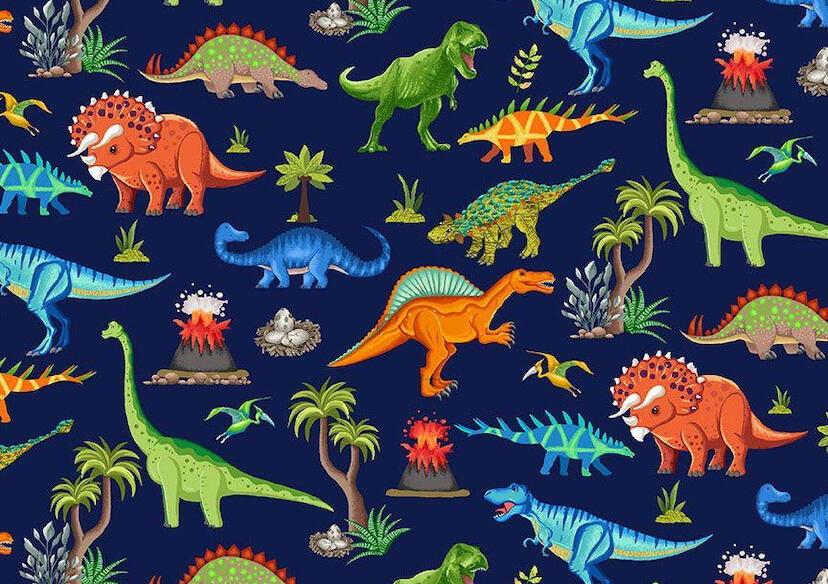
Novelty fabric is one of those materials that stops you in your tracks — bold, playful, and instantly recognizable. While it can feel challenging to work with, the addition of embroidery or thoughtful pairing with solid fabrics can elevate a novelty print into something truly special. Here's what you need to know.
What Is Novelty Fabric?
Novelty fabric features recognizable, themed imagery rather than abstract or purely decorative patterns. Think horses, vehicles, food, sports equipment, frogs, maps, or storybook characters. If the print tells a story or depicts a specific object, it's likely a novelty print.
A helpful distinction: a leopard-print fabric is not a novelty print — it's an abstract animal pattern. But a fabric depicting a leopard hunting in the savanna is a novelty print.
Also Known as Conversational Prints
Novelty fabrics are often called "conversational prints" because their recognizable imagery tends to spark conversation. They're eye-catching, familiar, and memorable — the kind of fabric people notice and comment on.
Directional Prints
Most novelty prints are unidirectional — meaning the design reads correctly from only one direction. Keep this in mind when cutting pieces for quilts or garments, as you'll need to plan your layout carefully to avoid upside-down motifs.
Limited Edition Releases
Novelty prints commemorating specific events (elections, coronations, anniversaries) are often released in limited quantities and tend to become collectors' items over time. If you see one you love, don't wait!
Tips for Sewing with Novelty Fabrics
1. Change Your Needle Frequently
Embellished, painted, or heavily printed novelty fabrics wear needles down faster than plain cotton. A dull needle snags fabric and causes skipped or uneven stitches — swap it out regularly throughout your project.
2. Pre-Wash Before Cutting
Embellishments and base fabric may have different washing requirements. Test a scrap using different washing methods before committing to your full piece — this saves you from discovering shrinkage or color bleeding after you've already sewn.
3. Always Use a Press Cloth
When ironing novelty fabric with metallic threads, paint, or embellishments, place a muslin or silk organza press cloth between the iron and the fabric. This prevents paint from transferring or metallic threads from melting onto your iron.
4. Use the Right Presser Foot
A roller foot or walking foot works well for fabrics that tend to stick or snag. Test on a scrap first to find what works best for your specific fabric.
5. Inspect Before You Cut
Manufacturing defects — smudged prints, uneven embellishments — are more common in novelty fabrics. Inspect the full length of your fabric before cutting to avoid discovering a flaw in the center of your finished project.
6. Sew on a Stabilizer
For fabrics with metallic threads or heavy embellishments, place a layer of tear-away stabilizer or tissue paper under the fabric while sewing. This prevents the embellishments from catching on the feed dogs and causing skipped stitches.
7. Test Buttonholes and Topstitching
Embellished fabrics can cause uneven or skipped stitches that are especially visible in topstitching. Test on a scrap before sewing any decorative stitching on your final piece. If buttonholes are problematic, consider using snaps or clasps instead.
What Can You Make with Novelty Fabric?
Novelty fabrics work beautifully for a wide range of projects:
- Quilts and quilt blocks (use as a focal print surrounded by coordinating solids)
- Children's clothing and accessories
- Tote bags and pouches
- Pillows and cushion covers
- Wall hangings and hoop art
- Upholstery accents
When pairing novelty fabric with other prints, lean toward solid or low-volume blender fabrics that let the novelty print take center stage without competing for attention.
Shop Novelty Fabrics at My Fabric Villa
Explore our collection of novelty fabrics at My Fabric Villa — from whimsical character prints to sophisticated conversational designs. We carry options in cotton, canvas, and more, suitable for quilting, apparel, and home décor projects. Get in touch if you need help choosing the right fabric for your project.